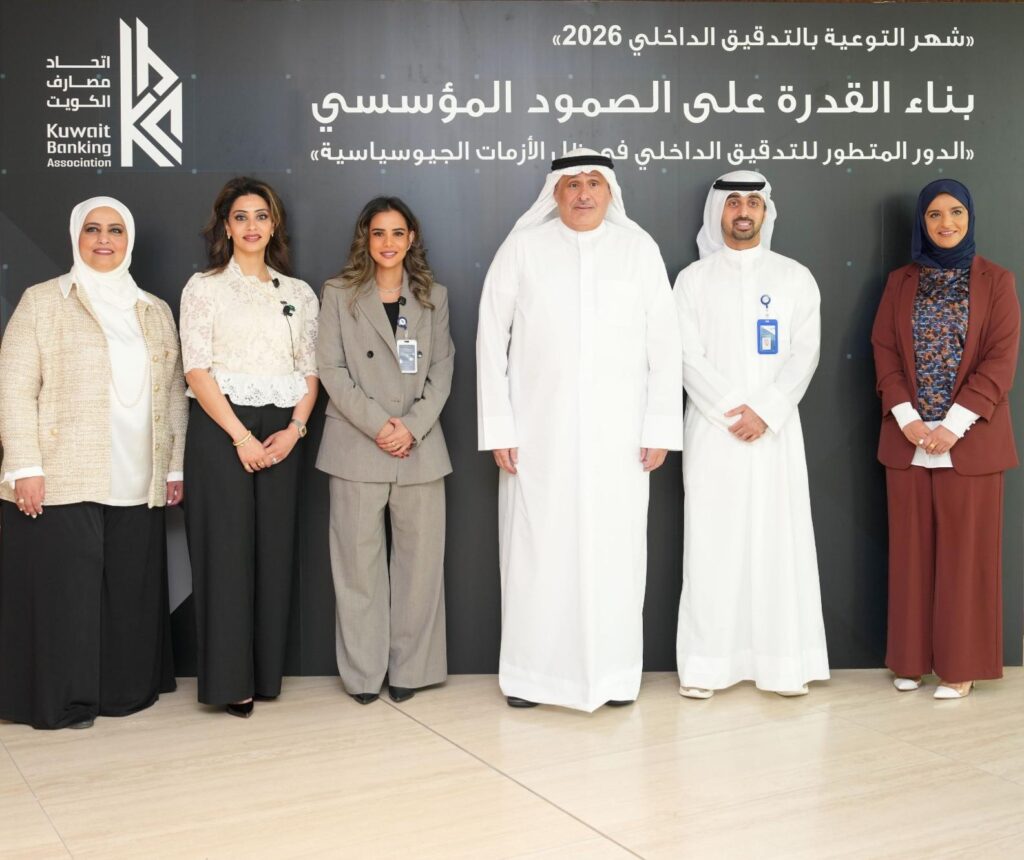

The Kuwait Banking Association organized a panel discussion
“Building Institutional Resilience: The Evolving Role of Internal Audit in Light of Geopolitical Crises” on the sidelines of Internal Audit Awareness Month.
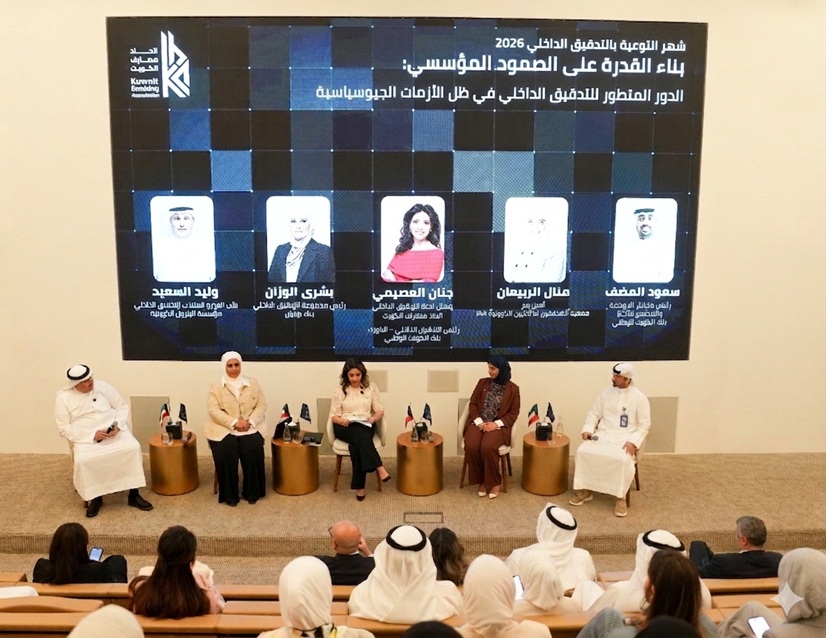
On the sidelines of Internal Audit Awareness Month, and in light of the rapid changes and geopolitical and technological challenges facing the world, the Kuwait Banking Association organized a specialized panel discussion entitled “Building Institutional Resilience: The Evolving Role of Internal Audit in Geopolitical Crises.” The discussion focused on the pivotal role of internal audit in enhancing institutional preparedness, supporting business continuity, and improving the efficiency of risk and crisis management.
On this occasion, Ms. Shaikha Al-Essa, Secretary General of the Kuwait Banking Association, emphasized that the rapid developments the world is witnessing today, along with the accompanying geopolitical, technological, and operational challenges, necessitate that financial institutions strengthen their institutional preparedness and resilience to ensure business sustainability and the efficient and effective continuity of services.
Ms. Al-Essa explained that the Kuwaiti banking sector places great importance on strengthening the concepts of governance, risk management, and business continuity, stemming from its belief in the importance of building institutions capable of adapting to rapid changes and confronting various crises with high efficiency. She noted that internal auditing has become one of the fundamental pillars supporting institutional stability and enhancing stakeholder confidence. She added that organizing this session stems from the Kuwait Banking Association’s commitment to supporting the exchange of expertise and professional knowledge, and highlighting global best practices in internal auditing, governance, and institutional resilience. This contributes to developing national competencies and enhancing the financial sector’s readiness for various future challenges.
Al-Essa emphasized that the session was honored by the participation of a select group of executive leaders and experts from the banking sector and institutions in both the private and public sectors, as well as international and local auditing firms. This participation significantly enriched the discussion by offering in-depth and diverse perspectives. Furthermore, this high-quality participation contributed to enhancing the quality of the outcomes and recommendations, and supported the integration of efforts among various stakeholders. The session also saw the participation of Mr. Nidal Tebawi, Chairman of the Internal Audit Committee at the Kuwait Banking Association and Head of the Internal Audit Group at the National Bank of Kuwait (NBK); Ms. Jenan Al-Osaimi, Head of Internal Audit – Kuwait at NBK; Mr. Waleed Al-Saeed, Deputy Managing Director of Internal Audit at Kuwait Petroleum Corporation (KPC); Ms. Bushra Al-Wazzan, Head of the Internal Audit Group at Boubyan Bank; Mr. Saud Al-Mudhaf, Head of Governance and Social (ESG) Risk at NBK; and Ms. Manal Al-Rubaian, Secretary of the Kuwait Internal Auditors Association.
Mr. Nidal Tebawi, Chairman of the Internal Audit Committee at the Kuwait Banking Association and Head of the Internal Audit Group at NBK, stated that, in observance of International Internal Audit Month, the Association organized the panel discussion to explore the role of internal auditing in enhancing institutional preparedness and resilience to crises and rapidly evolving challenges.
Mr. Tebawi emphasized that institutions today operate in an environment characterized by high levels of uncertainty and accelerating global changes, which necessitates that various sectors strengthen their institutional preparedness and resilience to confront diverse risks and crises. Tayebawi explained that current challenges are no longer limited to traditional risks, but now include cyber threats, operational disruptions, geopolitical volatility, pandemics, and third-party failures, in addition to emerging risks associated with modern technology. He pointed out that these changes necessitate adopting a proactive approach that enhances institutions’ ability to respond, recover, and ensure business continuity.
Tebawi stated that organizational resilience has become a strategic imperative, not an option, given the increasing focus of boards of directors and executive management on ensuring the continuity of vital operations and maintaining stakeholder confidence. He emphasized the pivotal role of internal audit in supporting these efforts by providing independent assurance services, assessing crisis preparedness, the effectiveness of business continuity plans, and the efficiency of governance and risk management.
He noted that the role of internal audit has witnessed remarkable development in recent years, no longer limited to traditional oversight, but evolving into a trusted advisory partner that contributes to identifying weaknesses, challenging assumptions, and enhancing the effectiveness of crisis management and business continuity frameworks, thereby supporting institutions’ ability to adapt to rapidly changing circumstances. Tayebawi noted that the panel discussion provided an important professional platform for exchanging experiences and practical insights among specialists in the banking and oil sectors, and for discussing best practices and challenges related to the future of internal auditing and its role in supporting sustainable and resilient institutions.
Tebawi concluded his statement by emphasizing the importance of continuing to develop internal auditing practices to keep pace with emerging risks and global developments, stressing that building institutions capable of adapting and responding effectively to crises is a fundamental element for achieving sustainability and enhancing trust and institutional stability.