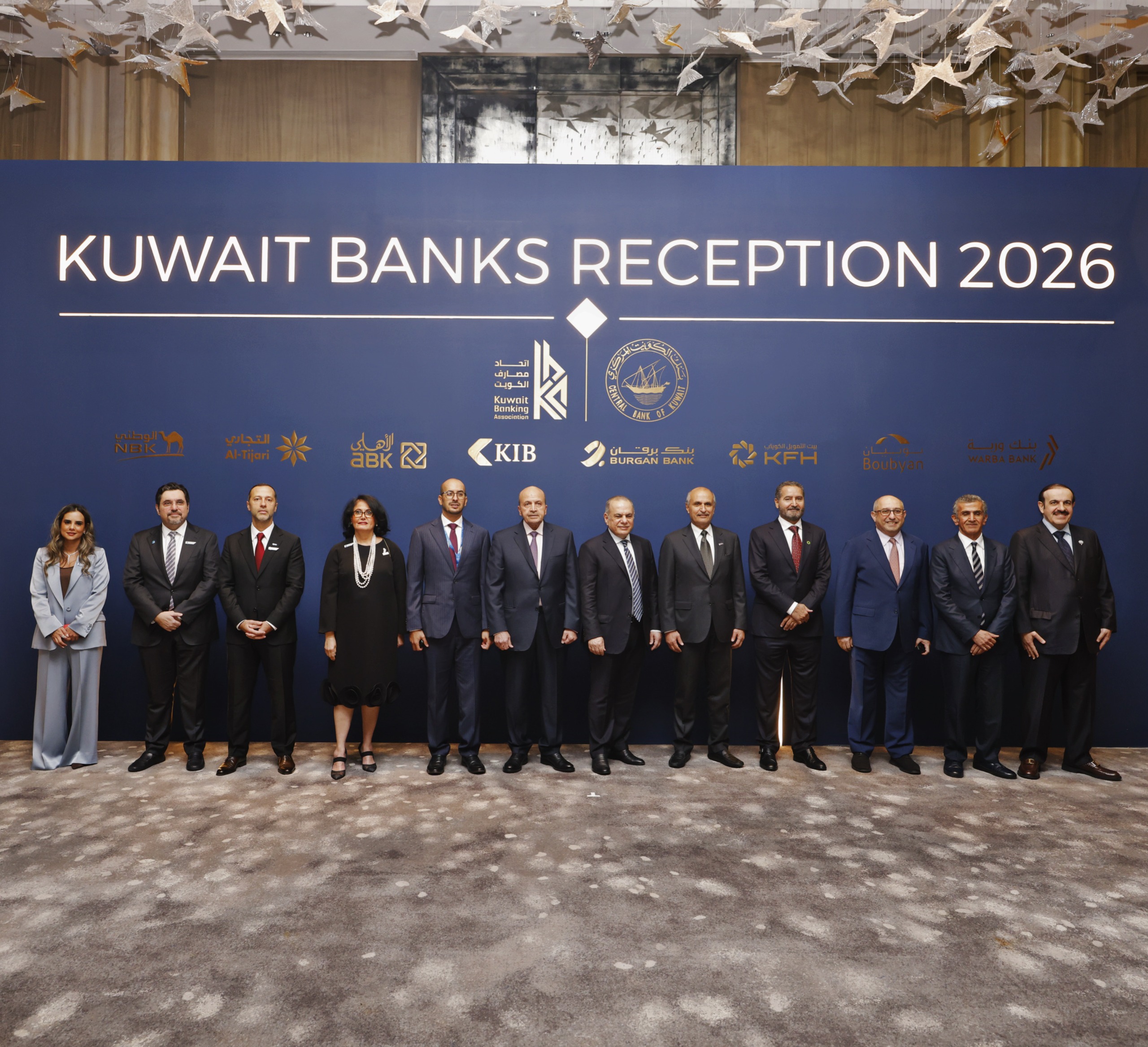

Under the Patronage and in the Presence of the Governor of the Central Bank of Kuwait
The Kuwait Banking Association Hosts a High-Level Reception for Kuwaiti Banks in Bangkok, Concurrent with the 2026 Annual Meetings of the International Monetary Fund and the World Bank Group
In the context of its participation in the 2026 Annual Meetings of the International Monetary Fund (IMF) and the World Bank Group, the Kuwait Banking Association (KBA) hosted a reception for Kuwaiti banks on the evening of Friday, October 16, 2026, in Bangkok, Thailand. The event was attended by a distinguished group of senior officials, policymakers, and leaders from the financial and banking sectors—representing Kuwait, the region, and the global community.
The reception was held under the patronage and in the presence of the Governor of the Central Bank of Kuwait, Mr. Basel Ahmed Al-Haroon. Also in attendance were the Minister of Finance, Prof. Yaqoub Al-Sayed Yousef Al-Refaei; the Ambassador of the State of Kuwait to the Kingdom of Thailand, Dr. Meshal Al-Mansour; as well as several central bank governors from Arab nations, chairpersons of Kuwaiti banks, senior executive leadership from financial and banking institutions, and prominent economic and investment figures from around the world.
Organizing this reception reflects the Kuwait Banking Association’s commitment to strengthening the presence of the Kuwaiti banking sector within major international economic and financial forums. It further serves to build bridges of communication with global financial leaders and institutions, underscoring the advanced standing that the Kuwaiti banking sector enjoys both regionally and internationally.
Kuwait Finance House (KFH)
On this occasion, Hamad Abdulmohsen Al-Marzouq, Chairman of the Kuwait Banking Association and Chairman of the Kuwait Finance House (KFH) Group, stated that participating in the 2026 Annual Meetings of the World Bank Group and the International Monetary Fund (IMF)—held in Bangkok, Thailand—serves as a significant opportunity to explore avenues for cooperation and partnership with global financial institutions, as well as to review key economic and financial developments.
He noted that the Kuwait Banks Reception—organized by the Kuwait Banking Association on the sidelines of the World Bank Group and IMF Annual Meetings—is a prominent economic event. It brings together government officials, policymakers, and heads of financial and investment institutions from around the world to exchange insights and discuss economic and financial challenges and trends.
Al-Marzouq emphasized that such participation provides an opportunity to showcase the strength of the Kuwaiti economy, as well as the competence, financial solvency, and resilience of the Kuwaiti banking sector. This is further underscored by the sector’s significant progress in areas such as financial technology (fintech) and sustainable growth. Moreover, the sector benefits from favorable ratings by leading global credit rating agencies, and its financial indicators remain sound and robust—a testament to the prudent oversight of the Central Bank of Kuwait and the banking sector’s adherence to the highest regulatory and supervisory standards. Such engagement facilitates the exchange of expertise and fosters bilateral investment and financial cooperation. He noted that Kuwait Finance House’s (KFH) participation in the annual meetings of the World Bank Group and the International Monetary Fund underscores its leading position both regionally and globally. As a premier global Islamic banking group with operations spanning 10 countries, KFH’s presence also highlights the significance of the Islamic finance industry and its role as a model capable of supporting financial stability and achieving sustainable development.
National Bank of Kuwait (NBK)
On this occasion, Issam Jassem Al-Sager, Vice Chairman of the Kuwait Banking Association and Vice Chairman and Group CEO of the National Bank of Kuwait (NBK), stated that NBK’s participation in the Kuwait Banks Reception reflects its commitment to supporting the international presence of the Kuwaiti banking sector and strengthening its role in global economic and financial forums. Held on the sidelines of the Annual Meetings of the International Monetary Fund (IMF) and the World Bank Group, this gathering serves as a valuable opportunity to engage with officials, policymakers, and representatives from financial and economic institutions worldwide. It allows for the exchange of insights regarding key market developments and challenges, while fostering new professional relationships and exploring potential collaborations and partnerships—all of which bolster the standing of the Kuwaiti banking sector and highlight its progress and leadership on both regional and international stages.
Al-Sager added that the event contributes to strengthening cooperation and strategic partnerships with international financial institutions, supporting the Kuwaiti banking sector’s efforts to expand its global footprint and enhance its competitiveness. These meetings provide a vital platform to showcase the resilience of the Kuwaiti economy and the strength of the local banking sector, which is characterized by high levels of stability, liquidity, and solvency, as well as the capacity to adapt to rapid economic and technological shifts.
Al-Sager further explained that this occasion offers an opportunity to discuss issues related to economic growth, risk management, and developments in financial markets. It also underscores the commitment of Kuwaiti banks to promoting international dialogue and cooperation, as well as exchanging expertise and best practices with various stakeholders. He noted that the National Bank of Kuwait (NBK) believes that active participation in such international events helps solidify Kuwait’s position as a trusted regional financial hub. It also opens new avenues for supporting economic development, attracting investments, and fostering opportunities for sustainable growth—all of which serve the interests of both the banking sector and the national economy.
Commercial Bank of Kuwait
Sheikh Ahmad Duaij Al-Sabah, Chairman of the Commercial Bank of Kuwait (CBK), stated that the Bank’s participation in the meetings of the International Monetary Fund (IMF) and the World Bank Group serves as a valuable opportunity to strengthen its presence in the banking sector. He noted that this reinforces the Bank’s position as a financial institution with an extensive network of correspondent banking relationships with a select group of international financial institutions. He further highlighted that these meetings provide a global forum for discussing economic and financial issues—as well as topics such as fintech, digital transformation, and cybersecurity—thereby creating greater opportunities for collaboration, the exchange of expertise, and the support of cross-border banking operations. Sheikh Ahmad emphasized the Bank’s commitment to continued investment in digital transformation, with the goal of delivering innovative, secure, and sustainable financial solutions.
Al Ahli Bank of Kuwait
The Executive Vice President of Al Ahli Bank of Kuwait Group, Abdullah Al-Sumait, also expressed his happiness at participating in the reception organized by the Kuwait Banking Association on the sidelines of the annual meetings of the Boards of Governors of the World Bank Group and the International Monetary Fund.
He stressed the importance of these global forums in exchanging views on the most prominent economic and financial developments, and exploring a basis for cooperation that contributes to supporting and enhancing sustainable growth and prosperity in the long term.
Al-Sumait added that in light of the rapid changes taking place in the global economy, enhancing international cooperation and maintaining an open dialogue between financial institutions has become more important than ever. Such events provide a valuable platform for strengthening relationships with major banks and financial institutions, exchanging experiences, and exploring new opportunities for cooperation. It also allows us to benefit from future visions and employ them in a way that contributes to the continued development of the Kuwaiti banking sector and enhancing its competitiveness.
Kuwait International Bank (KIB)
Raed Jawad Bukhamseen, Vice Chairman and CEO of Kuwait International Bank (KIB), stated that the Bank takes pride in participating in this international forum. He views it as a significant opportunity to connect and strengthen the Bank’s relationships with international financial institutions, exchange perspectives on the future of the banking industry, and explore its long-term prospects. The meetings of the International Monetary Fund (IMF) and the World Bank Group are of great importance, as they address key trends in growth, finance, and risk. KIB’s participation—as part of a high-level delegation from Kuwaiti banks—reflects the firm belief that the standing of the banking sector is built through impactful presence rather than mere statements.
This comes at a time when KIB continues to develop its innovative Islamic banking products and solutions, expand its digital services to better and more efficiently serve various customer segments, and bolster its role in financial markets. Such efforts open broader avenues for financing—both locally and regionally—and elevate the performance of the Kuwaiti banking sector. Furthermore, the Bank acknowledges the vital role played by the Kuwait Banking Association in sponsoring such forums and supporting the presence of the Kuwaiti banking sector on the international stage.
Burgan Bank
Faisal Mansour Sarkhou, Vice Chairman of Burgan Bank, stated that the bank’s participation in the Kuwait Banks Reception reflects its commitment to maintaining an active presence on key international financial platforms. He noted that this involvement allows the bank to continue contributing to dialogues concerning the transformations and issues shaping the future of the banking sector, while also expanding its network of relationships with global financial and economic institutions and leaders.
Held on the sidelines of the Annual Meetings of the International Monetary Fund and the World Bank Group, this event holds particular significance; it provides an opportunity to exchange insights and expertise, strengthen international partnerships and cooperation, and—at the same time—highlight the strength and standing of the Kuwaiti banking sector, while solidifying Kuwait’s presence within the global financial system.
Boubyan Bank
Adel Abdulwahab Al-Majed, Vice Chairman and Group Chief Executive Officer of Boubyan Bank, stated that participating in the annual meetings of the International Monetary Fund (IMF) and the World Bank Group provides an opportunity to monitor economic and financial developments, exchange expertise and insights on achieving economic balance, and leverage the experience of international institutions to develop proactive plans that strengthen the resilience and evolution of the Kuwaiti banking sector.
He added that the Kuwait Banks Reception—organized by the Kuwait Banking Association on the sidelines of these meetings—has become a prominent gathering for banking and economic leaders. It serves as a valuable opportunity to enhance Boubyan Bank’s presence on the international stage. Al-Majed emphasized that such engagements help solidify the Bank’s position as a leading financial institution, strengthen its relationships with elite international financial organizations, and open doors to partnerships that foster growth and financial innovation, ultimately contributing to the advancement of the global banking industry.
Warba Bank
In this context, Ms. Mai Mahhal Al-Mudhaf, a member of the bank’s Board of Directors, emphasized that the Kuwait Banks Reception in Bangkok represents a significant opportunity to strengthen the presence of the Kuwaiti banking sector and solidify its relationships with international financial and economic institutions. She noted that participation in this event reflects the commitment of Kuwaiti banks to engage, exchange expertise, and keep pace with developments in the banking industry. She added that such occasions help open new avenues for cooperation, foster partnerships, and showcase the expertise and capabilities of the Kuwaiti banking sector—all of which support its growth and development, while further enhancing Kuwait’s position as a promising regional financial hub.
Kuwait Banking Association
In her concluding remarks, Sheikha Al-Essa, Secretary-General of the Kuwait Banking Association, expressed her deep appreciation to the Governor of the Central Bank of Kuwait, Mr. Basel Ahmed Al-Haroon, for his gracious patronage and attendance at the reception. She also extended her gratitude to the Minister of Finance, Prof. Dr. Yaqoub Al-Sayed Yousef Al-Refaei, and the Ambassador of the State of Kuwait to Bangkok, Dr. Meshal Al-Mansour. Furthermore, she acknowledged the chairmen and executive leadership of Kuwaiti banks for their support and active participation, as well as all the guests whose presence contributed to the success of the event and the achievement of its objectives.
Al-Essa also thanked the National Council for Culture, Arts and Letters for its ongoing cooperation and for enriching the event with an authentic Kuwaiti cultural presence, which helped showcase Kuwait’s heritage and identity in an exemplary manner to guests from around the world.
She emphasized that the Kuwaiti banking sector is built upon a solid institutional foundation and possesses a strong capacity to keep pace with the rapid changes within the global financial industry. She noted that, in the coming period, the Association will continue to strengthen its role in unifying efforts, supporting the collective presence of Kuwaiti banks, and expanding areas of cooperation with international financial institutions—all of which will help solidify the standing of Kuwait and its banking sector both regionally and internationally. On another note, Al-Essa emphasized that the Kuwaiti banking sector maintains exceptional levels of liquidity and capital—comfortably exceeding regulatory and supervisory requirements. This underscores the strength and resilience of Kuwaiti banks, the soundness of their financial positions, and their capacity to continue supporting the national economy and meeting financing needs, without any adverse impact on liquidity indicators or financial stability.